How to Use AI to Write a Speech (Without Losing Your Voice)

Liam Sandford
Liam Sandford is a Head of Marketing, public speaking expert, and 2x Best Selling Author including the book Effortless Public Speaking. He helps ambitious professionals and entrepreneurs communicate with impact to get noticed, grow their career, and build their business.
Writing a speech is rarely about finding the right words. It is about deciding what matters most, shaping how you think about it, and landing on a message clear enough to deliver without a net. Most people get stuck in one of two ditches. They overthink the content until it sprawls, or they rush the structure and end up scattered. Both lead to the same place: a speech that feels scripted instead of spoken.
This is the article where I have to tell on myself. Early in my career I wrote a work presentation out word for word, leaned on the script completely, and then forgot a single line. I could not recover. The script that was meant to be a safety net turned into a trapdoor. That experience taught me the rule that runs through everything below: do not let anything, including AI, hand you a script to recite.
Used well, AI takes the friction out of the earliest, hardest part of speech writing, the blank page, without taking your voice or your ownership. It does not write the speech for you. It helps you think, organise, and refine so the finished speech sounds like you and feels natural to deliver. The point is not to outsource the work. It is to make it calmer, clearer, and more deliberate. Writing is one stage of the wider AI workflow for public speaking; this piece is about the writing itself.
Before You Use AI to Write Your Speech
AI needs something to work with. Ask it to write before you know what you are trying to say and it fills the gap with generic, plausible filler. This stage is about preparing the brief, not requesting a finished product. The clearer you are before you prompt, the more usable everything that follows becomes.
Start With Clarity Before You Ask AI to Write Anything
Here is the principle the whole craft hangs on: it is not about you, it is about your audience. They only care what you can do for them. So before you open AI, answer three questions. Who is the audience, why have you been asked to speak, and what do you want them thinking, feeling, or doing differently when you finish? The answers do not need to be polished, they just need to exist. Even rough clarity transforms the output.
There is a shortcut when you do not know the room well, and it is one I lean on: the 2 Year Test. Think back to where you were two years ago and the problem you were wrestling with. More often than not, your past self is sitting in your audience, facing the thing you have already worked out. Ask AI to help you reconstruct what you struggled with back then and you often land on the most useful angle for the people in front of you.
Using AI to Clarify Your Core Message
Every strong speech is built on a single message. Without one, you have a collection of points rather than something an audience can hold. The test is brutal and simple: if you cannot say your main point in one sentence, you are not clear enough yet, and no amount of clever phrasing will rescue it.
AI is genuinely useful here, not for the wording it produces but for the comparison it forces. Ask it for 5 ways to phrase your central idea, then look at them side by side. Seeing the options makes it obvious which one matters, and which were just noise. The value is the prioritisation, not the sentence. Once you have committed to that one line, everything else in the speech exists to support it.
How to Use AI to Structure Your Speech
Structure is what lets an audience follow you without effort. Even strong ideas lose their grip when they are poorly ordered. This is not about locking yourself into a rigid script, it is about giving the speech a shape that makes sense to listen to and is easy for you to hold in your head.
Building the Structure With the Nano Speech
The only structure you ever need is the Nano Speech, and it is the direct answer to the scripting trap. I created it so people could turn everyday conversations into low pressure practice. It has three parts: an engaging open, one clear message in the middle, and a purposeful close. It runs in 10 seconds and it scales to an hour. For anything longer, you stack nano speeches, swapping each close for a transition that carries the audience into the next point.
AI is a useful sparring partner for building it. Ask it to outline your material as a Nano Speech, then to show you where a section is missing context or a transition is doing no work. Treat the outline as a draft, never an instruction. Choose the shape that feels most natural to speak and bend it to fit you. The structure exists to support your delivery, not to cage it.
Refining Flow and Transitions With AI
Transitions are where a presentation is won or lost. Done badly, they are where people ramble and lose the thread. Done well, they make the whole thing feel like one continuous thought. Ask AI to review the joins between your sections and suggest bridging lines that keep momentum, then say them out loud to check they sound like you rather than like a contents page.
Flow also steadies you as a speaker. When you know exactly how one idea leads into the next, you are unlikely to lose your place or feel rushed, and the speech starts to feel like a conversation rather than a performance.
How to Use AI to Write Each Part of Your Speech
Once the structure is set, the temptation is to ask AI to write big chunks and edit them down. That is how you end up with a speech that is technically fine and emotionally flat. The better approach is to stay involved at every stage, using AI to explore options and surface clarity while you decide what belongs and what does not. AI is there to help you see your ideas more sharply. You still choose how they are said, and that is what keeps the speech yours.
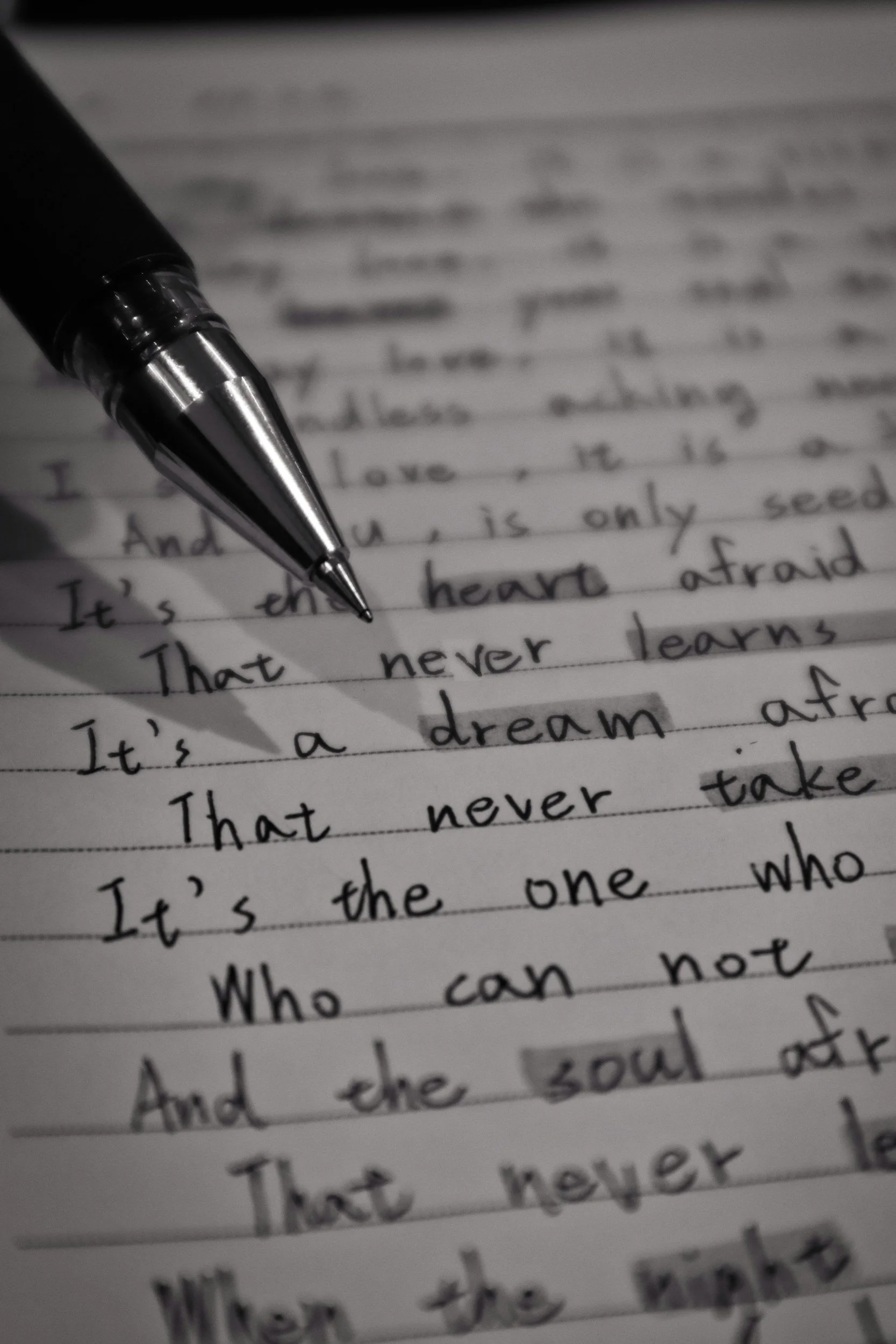
Writing an Engaging Opening With AI
The open decides whether the room leans in or checks out, usually within the first few seconds, which is why it is the hardest part to write. Never start with an agenda, it simply gives the audience permission to think about something else. I treat the open like a James Bond film, which drops you straight into the action rather than easing in gently.
AI is well suited to this because you can explore many directions fast without committing to any of them. Ask it for openings that frame a problem the audience recognises, challenge an assumption they hold, or drop them into a moment. Relevance and clarity beat cleverness in public speaking, so choose the one that feels relevant rather than impressive. Then rewrite it in your own words and say it aloud. The open has to sound like something you would genuinely say, not something that looks good on the page.
Developing the Body of Your Speech Using AI
The body is where trust is earned. It is where the audience decides whether your message holds together. Clear beats clever here more than anywhere: a confused audience is a lost audience, and if you can say it in 5 words, do not use 10. Ask AI to expand a point, then to pressure test whether it genuinely supports your one sentence message or just sounds interesting.
The discipline is to reduce, not add. Each pass through the body should make it simpler, not heavier. AI lets you try three ways of explaining the same idea in seconds, which makes it easier to pick clarity over volume. The result is a body that is focused, memorable, and easier to deliver under pressure.
Strengthening Stories and Examples With AI
People do not remember what you said, they remember how you made them feel, as Carl Buehner put it. Stories are how you make them feel something, and they do not need to be dramatic. Everyday moments, the commute, breakfast, a meeting that went sideways, are relatable precisely because they are ordinary. A few techniques carry most of the weight: engage the senses so the audience can picture the scene, and tell the story of a change, from how things were to how they became.
AI can brainstorm examples that fit your audience and tighten the structure of a story so it has a setup, a turning point, and a payoff rather than wandering. That is useful if you tend to over explain. But the story itself has to be yours. AI cannot manufacture lived experience or emotional truth, only help you shape it into a story that lands.
Crafting a Clear and Purposeful Close With AI
The close is where speeches fall apart. People run out of time and end abruptly, or throw the ending away entirely. The most common mistake is closing on "any questions?", which invites the hardest question in the room and leaves the audience with nothing to do. There is a better close, the one I coached speakers to use: tell them the one thing you want them to do next, then hand over with "here is what I plan to do next, what would you advise?" It opens a conversation without exposing you.
Ask AI for closing options built around the exact outcome you want, whether that is a decision, an action, or a return to the idea you opened on. A strong close gives the audience resolution and a reason to act, so the speech ends with clarity rather than trailing off.
Editing and Refining Your Speech With AI
Editing is where speakers quietly do the most damage. In chasing a perfect page, they polish the speech until it no longer sounds like anything they would say. AI is a strong editor, but only with restraint. The job of editing is not to impress a reader, it is to make the speech easier to understand, easier to remember, and easier to deliver when your heart is going.
Polishing Without Losing Your Voice
AI is excellent at spotting long sentences, repeated ideas, filler, and jargon, which makes it a good tool for tightening a speech that has bloated through overthinking. Here is the prompt most people never use and the one I use most: paste your draft back in and say, "act as a sceptical member of my audience, tell me where this loses you, where it sounds generic, and which claim you do not believe." It stings the first time, then it becomes the most useful pass you do.
The danger is polishing past the point of usefulness. Language that looks elegant on the page often sounds stiff spoken aloud, because public speaking is a spoken medium, not a written one. That is why reading your speech out loud is non negotiable. If a sentence is awkward to say, needs too much breath, or sounds unlike you, it does not belong. A little roughness builds more trust than a flawless sentence ever will, because audiences connect to people, not to perfectly engineered prose.
What AI Can and Cannot Do When Writing Your Speech
Knowing the limits is what protects your credibility. AI is a preparation tool, not a performance one. It is strong on structure, clarity, and exploration, and weak on context, nuance, and anything that happens live. Ask it to do the second set of jobs and you get something half baked.
The Limits of AI in Speech Writing
AI cannot account for the room, the energy of the audience, or the small adjustments you make mid delivery. It cannot read a face, sense disengagement, or respond to a silence. It will also state a wrong fact as confidently as a right one, so verify any statistic, name, or claim before it gets anywhere near your mouth.
It also cannot replace knowing your material. Confidence comes from knowing what you want to say well enough to adapt it on the spot, which is exactly what a memorised script destroys. This is the trap I fell into with that forgotten line years ago, and it is the trap AI makes faster to fall into. A speech should be owned and internalised, not recited. Hand your delivery to a memorised AI script and you outsource your confidence and lose all flexibility. Handing your delivery to a memorised script is one of the common mistakes that undermine a presentation.
Using AI to Prepare, Not Perform
AI does its best work before you stand up. It helps you arrive clear on your message, confident in your structure, and certain of the outcome you want. Confidence is success remembered, so the more you have rehearsed and the clearer your structure, the more recent wins you can draw on when you are in the room.
Once you are up there, the responsibility is human. Delivery, presence, pacing, and connection cannot be delegated. Used well, AI does not produce an AI written speech. It produces a well prepared speaker who knows exactly what they want to say, why it matters, and how to land it.
FAQs for Using AI for Speech Writing
Can AI write a whole speech for me?
It can produce a full draft, but delivering it as written is a mistake. AI scripts read smoothly and feel flat in the room, and memorising one piles on pressure. Use AI for structure and options, then write and internalise the speech in your own words.
How do I keep an AI written speech sounding like me?
Read every line aloud and rewrite anything you would never say out loud. Put your own stories and phrasing back in, keep some natural roughness, and treat AI's output as raw material rather than the finished article. That is the whole of keeping AI assisted writing sounding human.
What is the best structure for a speech?
A single clear message with an engaging open and a purposeful close, which is the Nano Speech. For anything longer than a few minutes, stack several of these and use transitions to move between them, since transitions are where a presentation is won or lost.
Should I memorise my speech?
No. Memorising makes you fragile, raises the pressure, and pulls your attention away from the audience. Know your material well enough to adapt it on the spot, and lean on structure rather than a script you have to recite.
TL;DR: How to Use AI to Write a Speech
AI helps you write a clearer, more confident speech by supporting your structure, ideas, and editing, without replacing your voice or the work of speaking well.
Get clear on your audience and your one sentence message before you prompt; rough clarity in beats polished confusion out.
Build with the Nano Speech (open, one message, close) and let AI draft structural options, not scripts.
Write part by part: AI explores openings, bodies, stories, and closes; you decide what is said and in whose voice.
Edit to simplify and read every line aloud; cut anything that sounds like a machine, and never memorise an AI script.
AI prepares you; you perform. Verify its facts, keep the delivery human, and arrive ready rather than rehearsed-rigid.
More From Liam Sandford
Read my book: Effortless Public Speaking. Learn how to speak confidently, reduce stress, and turn public speaking into your competitive advantage. These actionable public speaking tips will help you improve your presentation skills for any audience.
Join the free 5-day email course: Get daily lessons packed with practical strategies to deliver effective presentations and speak confidently. This course is designed to build your public speaking skills step by step. Sign up below: