Can AI Help Me with Public Speaking Anxiety?

Liam Sandford
Liam Sandford is a Head of Marketing, public speaking expert, and 2x Best Selling Author including the book Effortless Public Speaking. He helps ambitious professionals and entrepreneurs communicate with impact to get noticed, grow their career, and build their business.
Yes, though not in the way you might expect. AI is not a therapist and it is not a cure for nerves. What it can do is close one of the biggest drivers of public speaking anxiety: the feeling of being underprepared.
Most speaking anxiety is not a random fear. It is a reasonable response to uncertainty. You are not sure your message is clear enough. You are not sure you can handle a tough question. You are not sure the audience will care about what you have to say. AI can help you resolve each of those uncertainties through better preparation, and as the uncertainty shrinks, so does the dread of walking into a situation you do not feel ready for.
Why Public Speaking Anxiety Is Mostly a Preparation Problem
The speakers who feel most anxious are nearly always the ones who prepared least effectively. Not because they did not try, but because their preparation was busywork. Reading through your slides six times is not preparation. It is repetition without progress.
Effective preparation means knowing your material well enough to explain it in your own words, anticipating the questions, and rehearsing under conditions that genuinely test your understanding. Do that work and the anxiety does not vanish, but it drops to a level you can carry, because you trust yourself to handle what comes next. This is what I mean when I say confidence is success remembered: it is built from reps that went well, not from wishing the fear away. AI speeds up the effective kind of preparation, so the readiness that calms you arrives sooner.
How AI Reduces Anxiety by Strengthening Your Core Message
One of the quiet engines of speaking anxiety is vagueness. When your core message is unclear, even to you, everything downstream feels shaky. You are not sure what your presentation is really about, so you cannot tell whether any section is good enough, and the whole thing feels fragile in your hands. Clear beats clever here, and if you are unclear, your audience do not stand a chance.
AI is a useful partner for pressure testing that message. State it in one sentence and ask: "Is this clear? Is it specific? Could someone who heard only this sentence understand what my presentation is about?" If the answer is no, refine it and ask again until it passes. Once the core message is solid, the rest gets easier. You know what to include and what to cut, and you can answer questions calmly because they all trace back to one central point. That clarity is the foundation the rest of your confidence stands on.
How Simulating Tough Questions with AI Builds Real Confidence
The fear of being asked something you cannot answer is one of the most common sources of speaking anxiety. It runs as a background hum through the whole presentation, because you know the questions are coming and you do not know what will land.
AI shrinks that fear by making the unknown more known. Ask it to generate the ten hardest questions your specific audience might ask, and tell it to be a brutally honest sceptic rather than a gentle one. Then practise answering each out loud. You are not memorising scripts, you are rehearsing the skill of hearing a question, pausing, and shaping a clear reply. After a few rounds you notice that most hard questions are versions of three or four underlying concerns. Get comfortable with those, and the questions stop being something you dread. It also helps to have one honest fallback ready for the question you genuinely cannot answer: say you will take a look and come back to them, and then do.
Why AI Should Not Become an Anxiety Crutch
There is an important line between using AI to prepare thoroughly and using AI to manage your nerves in the moment. The first builds real confidence. The second builds dependency.
If you find yourself checking AI notes mid presentation for reassurance, or refreshing your phone backstage every few minutes for validation, the tool has stopped helping you grow and become a security blanket. It gets in the way of the internal steadiness that real speaking confidence is made of. The goal is to prepare so well that you no longer need it in the room. And if your anxiety does not ease over time despite genuine preparation, the issue may not be preparation at all. That is the point to speak to a speaking coach, or a professional who works with performance anxiety, rather than reaching for another tool.
How AI Helps You Break the Anxiety Cycle
Many speakers get stuck in what I call the Circle of Doom. You feel anxious, so you avoid speaking, which means you never collect the good experiences that would lower the anxiety, so the next opportunity feels just as frightening. Every avoidance quietly feeds the fear.
The way out is the opposite loop: small, survivable reps that each leave a little success behind, until the pattern reverses into a Circle of Success. AI makes those reps easier to reach. You do not need an audience to rehearse a section out loud, and you do not need to book a room or corner a colleague. You can run your opening, simulate a Q&A, and refine your message any time, which is the same kind of low stakes practice that gets you ready for an interview or presentation. One of the simplest habits here is to practise short: a handful of ten second nano speeches a day, each with a clear open, one message, and a close, so speaking becomes ordinary rather than an event.
The catch is to treat AI practice as a bridge to real practice, not a replacement for it. AI rehearsal builds familiarity with your material. Real speaking builds familiarity with the experience of standing in front of people. You need both, and the aim is to move from comfortable to confident to competent one rep at a time.
How to Use AI to Prepare for the Situations That Trigger Your Anxiety
Speaking anxiety is rarely general. Most people can name their specific triggers: being asked something they cannot answer, losing their place mid section, facing a flat and disengaged room, or presenting to senior people who might judge them.
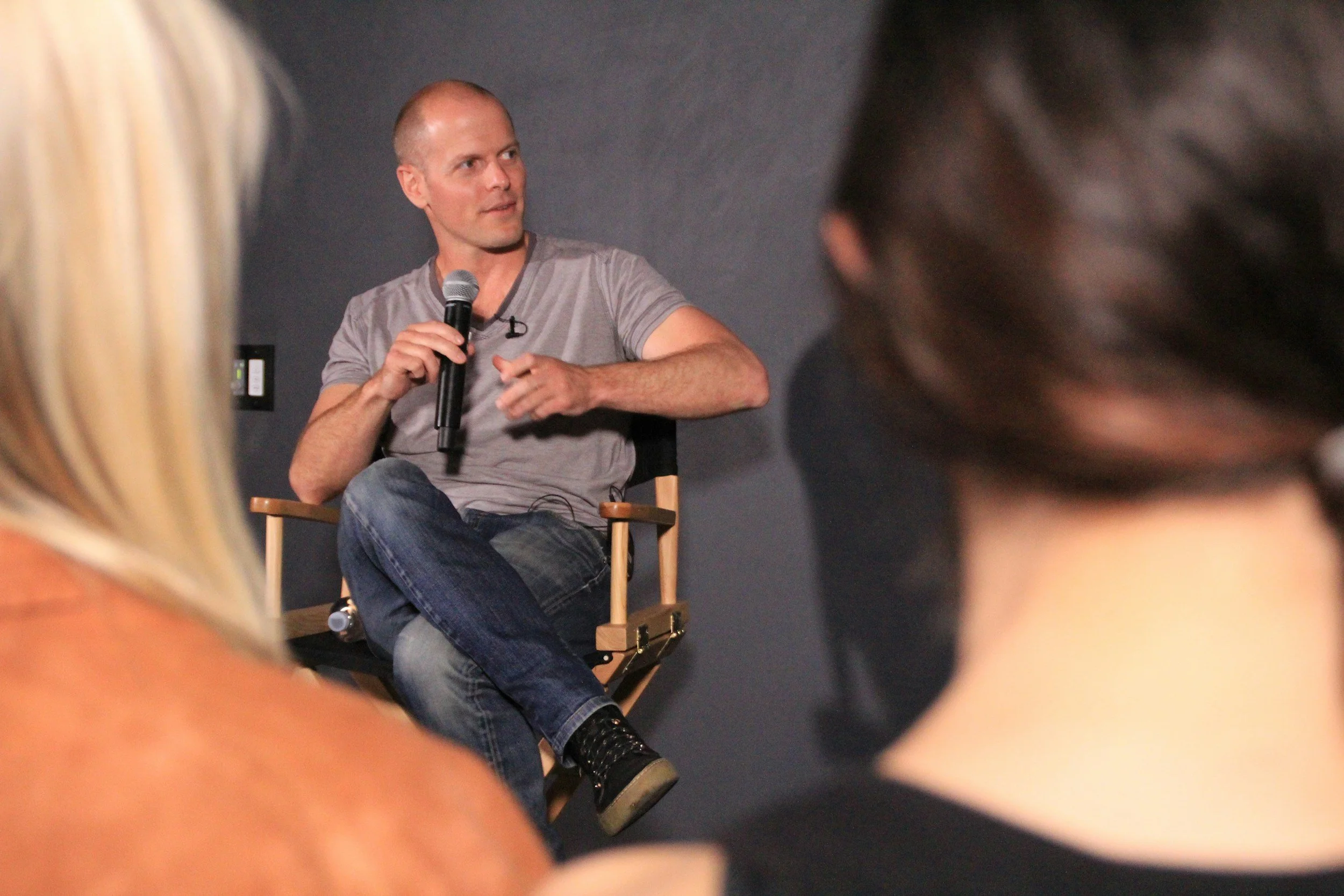
AI can help you rehearse for exactly those moments. If your fear is losing your place, practise by deliberately stopping mid section and asking: "I just lost my train of thought. Based on what I have covered, what should I say next to get back on track?" Rehearsing the recovery proves to you that you can survive the very thing you dread. If your fear is a hostile room, ask AI to role play a sceptical audience member so you can practise responding without getting defensive. The more you rehearse the specific trigger, the less power it holds over you.
Calming Your Body and Reframing the Nerves
Some of the anxiety is not about the speaking at all, it is logistics. A lot of backstage worry is really about parking, whether the clicker works, and whether your video will play, so clear those in advance and half the noise disappears. For the rest, use your body. I use box breathing before I speak, in for 4, hold for 4, out for 6, and if panic spikes a quick 2, hold 2, out 2 gives you a six second reset. I also power pose, after Amy Cuddy's work and reframed through Usain Bolt, whose victory pose is for himself, not the crowd. Before a big one I have stood in a bathroom cubicle with my hands in the air for two minutes, which sounds ridiculous and works.
It helps to reframe what the nerves are, too. Even Michael Jackson was nervous before going on. Nerves are simply your body getting you ready to perform, not proof that something is wrong. Most of us are our own worst critic and remember the wobble longer than the audience does, so be gentle with your own verdict afterwards.
What AI Cannot Do for Speaking Anxiety
AI cannot hand you the confidence that comes from real, positive speaking experiences. No amount of rehearsal replicates the feeling of finishing a presentation and watching the room respond well, and that feeling, repeated, is what turns an anxious speaker into a confident one.
AI also cannot reach anxiety that runs deeper than preparation. If your fear is intense enough to cause physical symptoms, avoidance, or real distress, that is a signal to work with a professional, not to add another preparation tool. For most speakers, though, the anxiety is practical rather than clinical. It comes from the gap between what you know you need to deliver and how ready you feel, and closing that gap is exactly what AI does well.
Public speaking anxiety is a sensitive subject, and if any of this is affecting your wellbeing beyond the ordinary nerves, it is worth talking to a qualified professional who can support you properly.
Frequently Asked Questions About AI and Public Speaking Anxiety
Can AI genuinely reduce my fear of public speaking?
AI reduces the preparation related part of speaking anxiety by helping you build real familiarity with your material, anticipate questions, and rehearse recovering from a mistake. It cannot switch off the physical stress response that comes from being watched, but it can get you on stage feeling as prepared as possible, which is the single biggest lever for managing nerves.
What is the fastest way to use AI to feel more prepared?
Start with your core message. State it in one sentence and ask AI whether it is clear and specific. Then generate the five toughest questions your audience might ask and practise answering them out loud. Those two exercises take under 30 minutes and target the two biggest sources of speaking anxiety: an unclear message and the fear of Q&A.
Should I use AI during my presentation to manage anxiety?
No. Leaning on AI mid presentation creates dependency and distraction. The nerve management happens beforehand, through thorough preparation, simulated questions, and rehearsal. If you have done that work, you should be able to deliver without needing any tool while you speak.
Is public speaking anxiety normal?
Yes. Public speaking is consistently rated among people's biggest fears, and some nerves are a normal response to a high stakes social moment. The difference between anxious and confident speakers is not the absence of nerves, it is a bank of recent, successful experiences of speaking. You can be nervous and confident at the same time.
TL;DR: Can AI Help Me With Public Speaking Anxiety?
AI helps with speaking anxiety by closing the gap between how prepared you need to be and how prepared you feel.
Most speaking anxiety comes from ineffective preparation, not random fear, so preparing well is the fix.
Use AI to sharpen your core message and to simulate the tough questions until they stop frightening you.
Break the Circle of Doom with small, low stakes reps that each leave a little success behind.
Rehearse your specific triggers, and calm your body with breathing and a power pose before you go on.
Treat AI as a bridge to real speaking, never a substitute, because only real reps build lasting confidence.
More From Liam Sandford
Read my book: Effortless Public Speaking. Learn how to speak confidently, reduce stress, and turn public speaking into your competitive advantage. These actionable public speaking tips will help you improve your presentation skills for any audience.
Join the free 5-day email course: Get daily lessons packed with practical strategies to deliver effective presentations and speak confidently. This course is designed to build your public speaking skills step by step. Sign up below: