How to Use AI for Storytelling and Narrative Building in Speeches

Liam Sandford
Liam Sandford is a Head of Marketing, public speaking expert, and 2x Best Selling Author including the book Effortless Public Speaking. He helps ambitious professionals and entrepreneurs communicate with impact to get noticed, grow their career, and build their business.
Stories make a presentation stick. People forget statistics within minutes and bullet points within hours, but a well told story stays with them for years. As Carl Buehner put it, people do not remember what you said, they remember how you made them feel, and a story is how you make them feel something. The problem most speakers face is not finding stories, it is shaping them so they serve the message and land with the room.
This is where AI earns its place, not by inventing stories, but by helping you shape the ones you already have. It can tighten a rambling anecdote into a focused narrative, suggest where a story fits in your structure, and help you find the emotional core of an experience you want to share.
Why AI Should Never Write Your Stories for You
The power of a story in a presentation comes from one thing: it happened, to you or to someone you know, and you are sharing it honestly. An AI generated story, however polished, lacks the specificity and emotional truth that makes a room lean in. When you tell a real story, your voice changes, your pacing shifts, your body follows. Those small signals tell the audience this is genuine, and they answer with attention and trust. A fabricated story cannot do that, because you have no lived experience to draw on when you deliver it.
My own rule is firm here: personal stories have to be real. AI's job in storytelling is structural, not creative. It helps you shape what you already know, never generate what you do not.
How AI Helps You Find the Story Hidden in Your Experience
Most speakers have more usable stories than they think. The trouble is that real experiences do not arrive neatly packaged as narratives. They are messy, full of irrelevant detail, unclear timelines, and lessons that only make sense in hindsight. Your stories also do not need to be dramatic, because everyday moments, a difficult breakfast, a commute that went wrong, a conversation with your kids, are relatable precisely because they are ordinary.
AI can help you dig the story out of the raw material. Describe what happened in plain language, mess and all, then ask: "What is the core narrative here? If I had to tell this in 90 seconds to illustrate [your key point], what would I keep and what would I cut?" That prompt makes AI find the through line, which is the most valuable thing a story has and the hardest thing to see clearly when you are the one who lived it.
How AI Helps You Open Stories in the Middle of the Action
One of the most powerful techniques is the James Bond open: start in the middle of the action rather than at the beginning, the way every Bond film drops you straight into a chase before you know who anyone is. Instead of "Last year I was invited to speak at a conference," you open with "I was standing backstage, my hands were shaking, and I had exactly three minutes before they called my name."
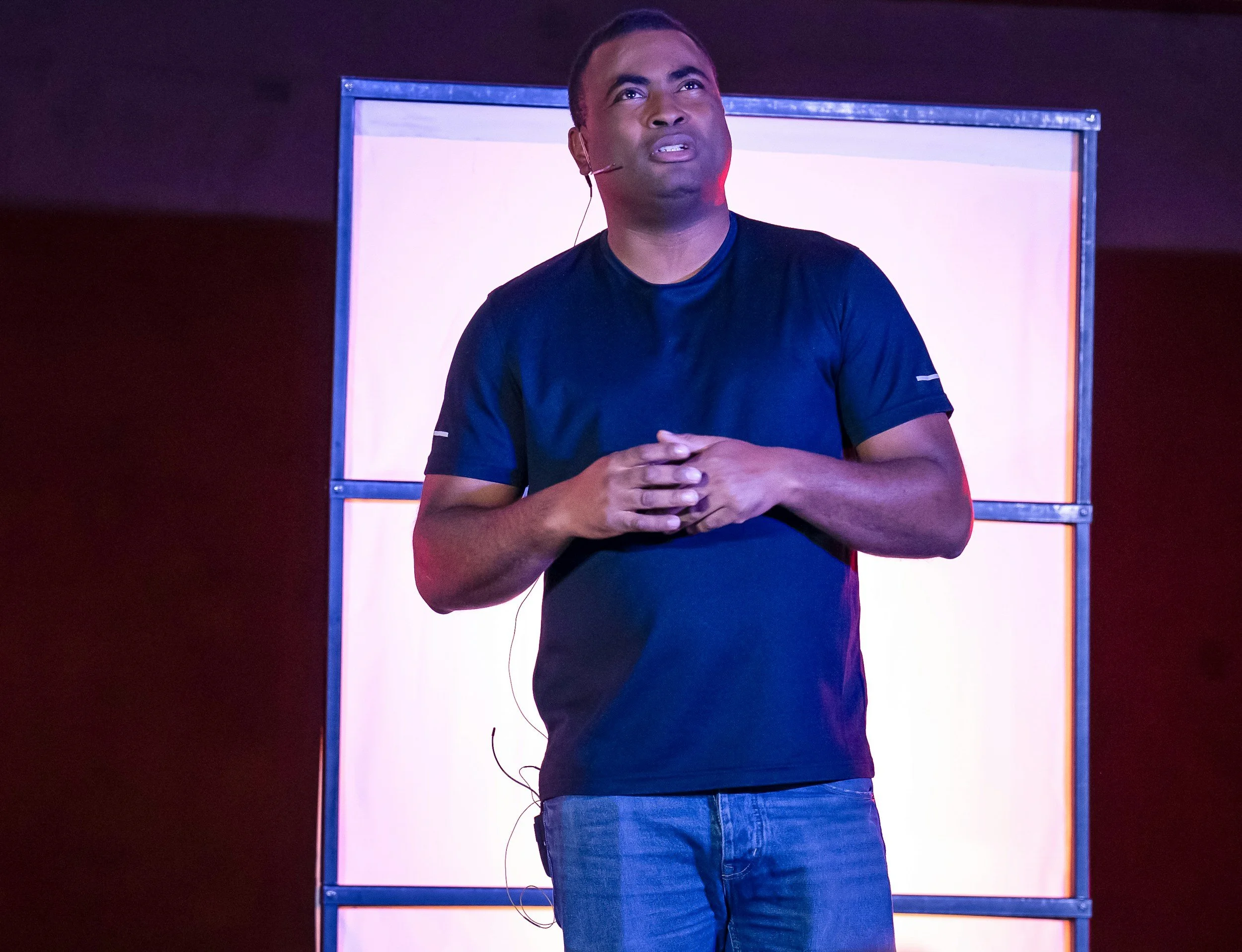
Give AI the full version and ask: "Where is the moment of highest tension or the most vivid sensory detail? If I started there instead of at the beginning, what would I need to fill in afterwards?" Opening in the action grabs attention instantly and creates curiosity: the audience wants to know how you got there and what happens next, and that pull is what keeps them listening.
How to Use AI to Connect Stories Back to Your Core Message
A story with no clear link to your message is entertainment, not communication. The room enjoys it, then has no idea what to do with it. Every story should end with a clear bridge to your point, and the strongest way to build one is to deliver your main point at the peak moment of the story, when the audience is most invested.
Ask AI to test the join: describe the story and your message, then ask, "Does this story naturally illustrate this point, or am I forcing it?" If the connection feels forced, the story may not belong here, however good it is. You can also ask AI for the single sentence that should follow the story, the line that turns the narrative into the argument. That transition is usually the hardest line to write and the most important to get right, because transitions are where a presentation is won or lost.
How to Use AI to Add Sensory Detail Without Over Writing
Good stories use specific, sensory language. "I was nervous" is forgettable. "My hands were cold and I could hear my own breathing" puts the audience in the moment. This is the engage the senses technique, and it works because the audience pictures the scene rather than just hearing a summary. There is a fine line between vivid and overdone, though, and crossing it makes you sound like you are reading a novel rather than telling a story.
Give AI a flat version of a moment and ask: "Add one or two specific sensory details that make this more vivid without overwriting it." The one or two constraint matters, because more than that and the story bogs down. Then, as always, rewrite the suggestion in your own words, since AI sensory language tends to sound literary rather than spoken, and your version will land more naturally on stage.
How to Build a Story Bank with AI
The best speakers keep a collection of stories to draw on depending on the topic, audience, and moment. Building it is a habit, not a one off, and it works on a simple rule of noticing: whenever something happens that stirs a genuine reaction, at work, in conversation, in ordinary life, jot it down. Then periodically sit with AI and ask, "Here are five experiences I noted this month. Which ones have a clear narrative arc, and which could illustrate a universal lesson?"
Not every experience becomes a usable story, and AI helps you filter fast, so you spend your time developing the strongest candidates and quietly file the rest. Over a few months you build a bank you can reach into for any room, which is a calmer place to be than scrambling for a story the night before.
What AI Gets Wrong About Storytelling in Speeches
AI defaults to literary storytelling: rich description, complex characters, layered themes. But a presentation is not a novel, it is a conversation with a room of people listening in real time, with limited attention and no way to read back a line they missed. A speech story needs to be:
Short enough to serve the point without swallowing the section.
Clear enough to follow on first hearing.
Specific enough to feel real.
Connected clearly enough that nobody has to guess why you told it.
One shape works better than almost any other for this: tell the story of a change, from how things were to how they became. That before and after arc is easy to follow and lands the lesson without you having to spell it out. If AI hands you a perfectly written three paragraph story, your job is to strip it back to the 60 second version you can tell from memory that still makes the audience feel something.
Frequently Asked Questions About AI and Storytelling in Speeches
Can AI write good stories for speeches?
AI can structure and refine a story, but the best speech stories come from real experience. It is most useful when it shapes a true story you already have: finding the core narrative, spotting the strongest entry point, and cutting the detail that does not serve the message. Invented stories lack the authenticity that earns an audience's trust.
How long should a story be in a speech?
Most work best between 30 and 90 seconds. Much longer and you risk losing the room unless the story is exceptional. Use AI to cut a long story to its essential moments, keeping only the details that carry the emotional core and the link to your message.
How many stories should I include in a single presentation?
For a 15 to 20 minute presentation, one to three is the right range, each doing a different job: one to open with connection, one to illustrate your main point, and perhaps one to close with resonance. More than three and it becomes a string of anecdotes rather than a structured argument.
Should I ever use hypothetical stories in a speech?
Hypotheticals work if you frame them clearly as hypothetical. "Imagine you are in this situation" is honest and can be effective. Presenting a hypothetical as something that really happened is dishonest and risky, because audiences are perceptive, and the moment they suspect a story is invented, it undermines everything else you say.
TL;DR: How to Use AI for Storytelling and Narrative Building in Speeches
AI helps you shape and structure real stories, but it should never replace the genuine experiences that give a story its power.
Use AI to find the core narrative in your raw experiences, not to invent stories from nothing.
Open in the middle of the action, and deliver your main point at the story's peak moment.
Add one or two sensory details for vividness, then rewrite in your own words so it sounds spoken.
Tell the story of a change, from how things were to how they became, so the lesson lands on its own.
Build a story bank by noting real moments and using AI to filter for the strongest, most universal ones.
More From Liam Sandford
Read my book: Effortless Public Speaking. Learn how to speak confidently, reduce stress, and turn public speaking into your competitive advantage. These actionable public speaking tips will help you improve your presentation skills for any audience.
Join the free 5-day email course: Get daily lessons packed with practical strategies to deliver effective presentations and speak confidently. This course is designed to build your public speaking skills step by step. Sign up below: